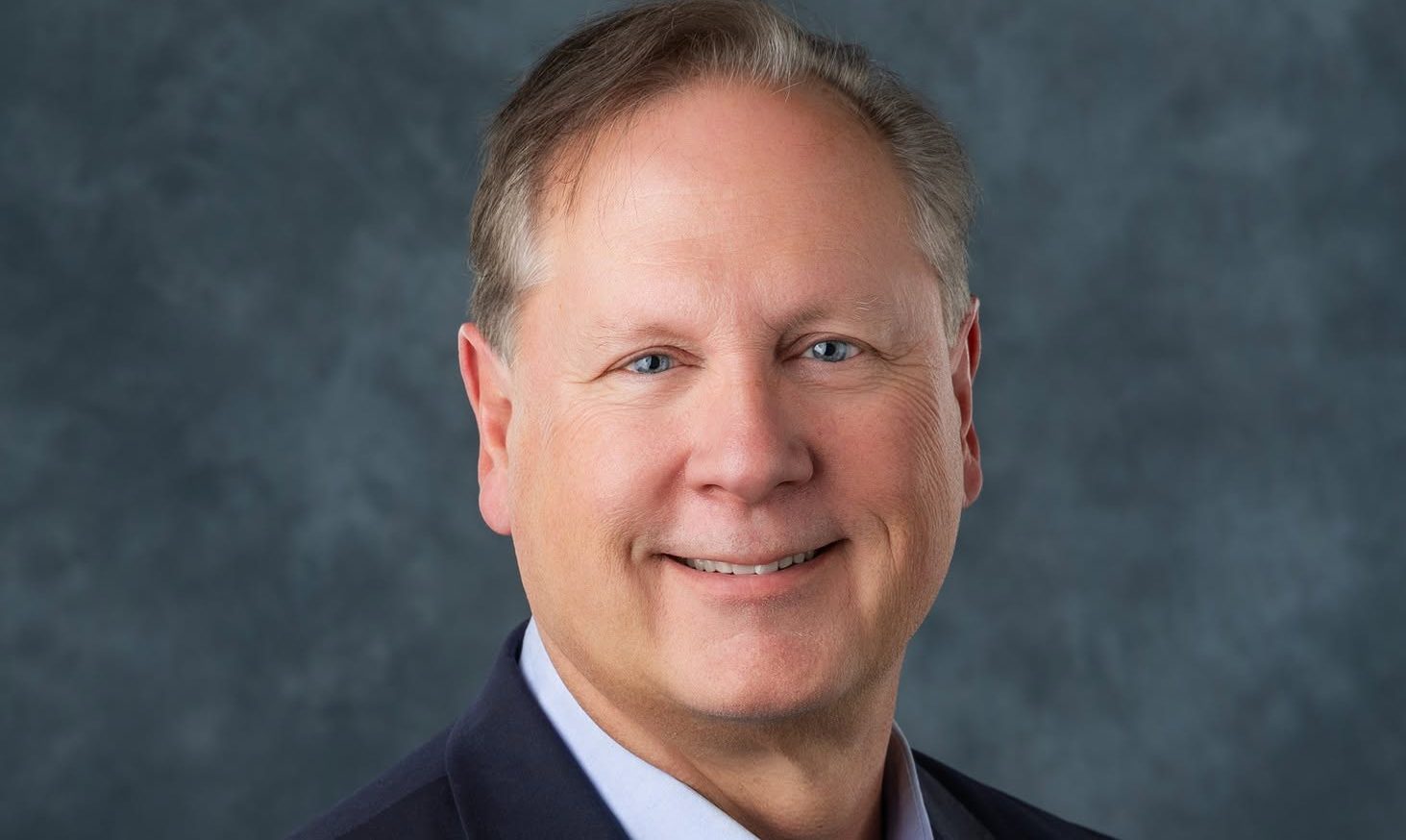
Shannon Taylor
CEO/Publisher
When Dr. Kent Kelso joined the Martin Board of Mayor and Aldermen on February 9, 2026, the city was still dealing with the consequences of a state investigation that uncovered hundreds of thousands of dollars in misused public funds. Former Mayor Randy Brundige had resigned less than three months earlier, criminal charges had been filed in connection with the investigation, and residents were demanding greater accountability from their local government.
Kelso entered that environment promising a different approach to leadership. Within months, the Ward 2 alderman announced his candidacy for mayor, building his campaign around government reform, financial oversight, economic development and a strategic planning initiative he believes can help Martin address its long-term challenges.

Much of Kelso’s argument for why he should lead Martin rests on experience accumulated elsewhere. He has spent more than three decades working in higher education, held administrative positions at universities across the country and served on the Independence City Council in northern Kentucky. His campaign points to his involvement in planning for that community during a period in which its population approximately doubled.
Those experiences are central to the qualifications Kelso presents to voters. They also provide a public record against which his claims can be examined, including documented accomplishments, professional controversies, an unsuccessful Kentucky political campaign and questions about the relationship between his earlier planning work and the results he attributes to it.
Kelso’s professional career has included positions at Pittsburg State University in Kansas, the University of Wyoming, Northern Kentucky University, the University of South Florida St. Petersburg and Texas A&M University-Texarkana. He eventually came to the University of Tennessee at Martin, where he chaired Educational Studies and later directed the master’s program in Higher Education Leadership. His responsibilities across those institutions have included student services, enrollment, retention, university policy and institutional planning.
While working at Northern Kentucky University, Kelso became involved in local government in Independence, a growing community within the Cincinnati metropolitan area. He served on the city council during 2005 and 2006, when the city was considering development, infrastructure and its future direction.
Kelso’s current mayoral campaign website credits him with helping develop a strategic vision for Independence during a period when its population increased from approximately 15,000 to 30,000 residents. The city’s population did grow substantially, but the timing and scale of that growth require a closer examination of what can be attributed to his work.
According to the U.S. Census Bureau, Independence had 14,941 residents in 2000. By 2010, the population had reached 24,757, an increase of 9,816 residents over the decade. The 2020 Census recorded 28,676 residents, and the Census Bureau’s July 2025 estimate placed the population at 30,198.
Those figures show that Independence more than doubled in population between 2000 and 2025. They also show that much of the increase occurred during the decade surrounding Kelso’s relatively brief service on the city council. The community had already begun growing before he took office and continued expanding for nearly two decades after his service ended.
The city’s planning history also predates Kelso’s election. An initiative known as Independence Tomorrow began in 1999, several years before he served on the council.
When The Weakley County Examiner questioned Kelso about the planning work he cites, he identified a separate initiative known as A Vision for Independence. Kelso said he authored the resolution establishing that process and chaired the committee responsible for developing recommendations.
“It was not a population-growth effort, it was a strategic planning and vision initiative to change the trajectory of the city over the next 10-20 years and hopefully impact economic development, housing, and population,” Kelso wrote in his response.
According to Kelso, the city council adopted the committee’s recommendations and assigned implementation responsibilities to the city manager. His explanation described a collaborative planning process intended to influence future decisions rather than a development program he personally controlled.
The available population figures support the conclusion that Independence experienced substantial growth, but they do not establish how many residents moved there because of the recommendations developed by Kelso’s committee. Nor do they identify which subsequent housing developments, commercial projects or infrastructure improvements resulted directly from that initiative.
The issue is not whether Kelso participated in municipal planning. His service and involvement are part of his documented record. The question is how much of the population increase highlighted in his campaign materials can reasonably be attributed to a planning effort undertaken during approximately two years of council service.
Kelso has described the initiative as an effort to influence the city’s direction over the following 10 to 20 years. That is a different claim from demonstrating that the initiative produced the population growth cited in his campaign. The Examiner has not identified documentation establishing a direct causal relationship between his planning work and the increase from approximately 15,000 to 30,000 residents.
Kelso also discussed his Kentucky municipal experience during an interview with The Examiner, saying he had run for Independence City Council and won. His council service is established, although the records examined for this article do not independently establish the precise election result or margin he referenced. His later defeat in a separate county race does not contradict his statement that he previously won a city council election.
During that same interview, Kelso said he developed a leadership model called the Internal Mechanics of Leadership and wrote about it for the Kentucky League of Cities. He described the model as emphasizing the relationship between leadership, influence and service to the community. The Examiner has not been able to independently review the original article or established how the model was implemented in Independence.
In 2006, while still employed at Northern Kentucky University, Kelso sought a seat on the Kenton County Fiscal Court. He ran in the Republican primary for county commissioner in the Second District against Sara Voelker. The contest was close, but Kelso lost and did not advance to the general election.
That campaign also resulted in a formal complaint concerning his use of university resources.
On May 3, 2006, Daryl Lee Martin filed a sworn complaint with the Kentucky Registry of Election Finance alleging that Kelso had used Northern Kentucky University’s telephone and email services for campaign purposes. The complaint argued that the activity constituted an improper corporate contribution and that the value of the services should have been disclosed as an in-kind campaign contribution.
The allegations followed public records requests concerning Kelso’s university telephone and email activity. Those records established that some campaign-related communications had occurred using university services.
In a response submitted through his attorney in June 2006, Kelso acknowledged using university telephone and email services for campaign-related purposes on isolated occasions. He disputed the allegation that the activity constituted a prohibited contribution under Kentucky election law.
Northern Kentucky University had already addressed the matter internally.
According to the Registry’s investigative findings, NKU Vice President for Student Affairs Mark Shanley sent Kelso a letter dated January 4, 2006, reprimanding him for using university resources for non-university purposes. The letter specifically identified telephone and email services.
Kelso subsequently informed the Registry that Shanley had told him the campaign-related activity violated the university’s Acceptable Use Policy for Technological Resources. Kelso said he attempted to reimburse the university, but university counsel returned the payment because the services had no ascertainable monetary value.
The Registry’s September 26, 2006, findings provide specific figures for the activity under examination. Investigators identified 21 outgoing campaign-related emails and 32 responses to campaign-related emails sent from Kelso’s university office computer over approximately seven months. Those communications were among approximately 5,000 emails reviewed.
The records also identified 24 campaign-related local telephone calls among several hundred calls made during the period.
The Registry examined whether those communications constituted a prohibited corporate contribution and whether their value should have been reported under Kentucky’s campaign-finance disclosure requirements.
Its legal analysis concluded that Northern Kentucky University was not a corporation within the meaning of the campaign-finance provisions cited in the complaint. The Registry also found no evidence that the value of the incidental university services exceeded the $100 threshold applicable to the in-kind reporting allegation.
On September 26, 2006, the Registry found no probable cause to believe Kelso had violated the cited campaign-finance laws and dismissed the complaint.
That dismissal resolved the election-finance allegations before the Registry. It did not erase the university’s separate reprimand or establish that the campaign-related use complied with NKU policy. The Registry expressly limited its determination to the election-finance statutes within its jurisdiction.
The matter was also examined by The Northerner, Northern Kentucky University’s student newspaper, which reported on the allegations and university records during the campaign. Its reporting did not substantiate broader claims of improper resource use beyond the communications documented in the investigation.
The same year, Kelso faced public criticism over his response to a reported incident involving an openly gay student and resident assistant at Northern Kentucky University.
Jeremy Phillippi, a sophomore and resident assistant in Kentucky Hall, reported that he returned to his residence hall around 12:30 a.m. on August 28, 2006, after handling a roommate dispute in another building and discovered an anti-gay message written in black permanent marker on his dormitory door.
The message included a homophobic slur and expressed a wish that Phillippi would contract AIDS. Phillippi also reported that decorations on a nearby bulletin board had been torn down. Those decorations included information about his involvement with Common Ground, the university’s gay-straight alliance, and similar organizations.
Phillippi reported the incident to university housing officials and filed a report with campus police the following day. However, he had cleaned the writing from his door before officers could examine it. University police were therefore unable to collect evidence of the message itself, although Phillippi said officers took possession of a dry-erase board that had also been marked.
Phillippi subsequently expressed frustration with the university’s handling of his complaint. He believed administrators had failed to respond appropriately to what he considered intimidation based on his sexual orientation.
University Housing Director Matt Brown acknowledged the seriousness of the reported conduct but said investigators had been unable to substantiate what occurred.
Kelso, who met with Phillippi about the incident, defended the university’s decision not to take disciplinary action without supporting evidence.
In a September 13 article published by The Northerner, Kelso said the university could not confirm that the reported incident had occurred because investigators had not found evidence of the writing or identified a suspect.
“I don’t think it’s appropriate to do anything, especially if we have no evidence,” Kelso told the newspaper.
He also questioned the expectation that administrators should act solely on the student’s account.
“It sounds like Jeremy wants us to do something based on his word alone. We just don’t do that,” Kelso said.
Those statements became a focus of criticism from the Kentucky Equality Federation, a statewide organization advocating for gay, lesbian, bisexual and transgender rights. Phillippi had contacted the organization after becoming dissatisfied with the university’s response.
On September 18, the federation sent a letter to NKU President James Votruba criticizing the handling of the matter and specifically describing Kelso’s statements to The Northerner as unacceptable. The organization called for administrators to take a more active role in addressing the complaint and issue a public statement condemning harassment and intimidation based on sexual orientation or gender identity.
The federation also adopted a resolution authorizing further legal and civil action, including peaceful protests, if the university failed to take additional educational measures by September 29.
University officials maintained that they had responded through housing personnel and campus police. Shanley said the administration was taking the matter seriously and considering ways to reinforce expectations of tolerance and respectful conduct.
On September 19, Shanley and Kelso attended a Common Ground meeting, where they spoke with students about discrimination, tolerance and previous anti-gay incidents at the university. Their participation became part of the university’s response to the concerns raised by Phillippi and the federation.
Votruba also responded to the federation in writing, stating that the university had investigated the complaint and that the reported conduct was inconsistent with NKU’s values. He indicated that the university would communicate a broader message to students about respecting others and discouraging threatening behavior.
By September 26, Kentucky Equality Federation President Jordan Palmer announced that he was satisfied with the university’s response following discussions with Shanley. Palmer described Shanley as receptive and supportive and said the administrator had made himself available to Phillippi if additional problems occurred.
The federation also acknowledged Kelso’s participation in the Common Ground meeting. University Housing subsequently supported a two-day educational program on diversity, tolerance and AIDS that Phillippi helped organize with another resident assistant.
Campus police ultimately closed their investigation without identifying a suspect. University Police Chief Harold Todd said investigators had no leads and considered the case inactive.
The incident did not result in a documented finding that Kelso discriminated against Phillippi. The public controversy centered on his statements about the evidence necessary to substantiate the complaint and whether university administrators had responded adequately to the reported harassment. The university’s subsequent outreach and the federation’s acceptance of that response brought the public dispute to a close.
Kelso’s work at Northern Kentucky University also included contributions for which university leadership publicly credited him.
In April 2007, The Northerner reported that NKU President James Votruba recognized Kelso’s work involving the university’s student union, student rights and responsibilities code, student housing and campus recreation. The acknowledgment accompanied news that Kelso was leaving NKU to accept a senior administrative position at the University of South Florida St. Petersburg.
Kelso began serving as regional vice chancellor for student affairs at USF St. Petersburg in June 2007, taking on responsibilities involving student services and campus life during a period of development and expansion.
One of the largest projects associated with that period was the University Student Center, which later became the subject of scrutiny over financing, student fees and changes to the original plans.
Students had supported increased fees to finance expanded facilities and services. As the project developed, however, university officials faced decisions involving construction costs, student housing, dining facilities and the allocation of available space.
The resulting development included a residence hall and dining facilities, while some student-service functions were relocated to another building.
In 2012, The Crow’s Nest, the university’s student newspaper, investigated how the project had changed and whether students received the facilities they expected when supporting the original proposal.
The reporting described financing involving a 30-year bond and annual debt-service obligations of approximately $1.33 million. Former student leaders questioned changes to the plans and the use of student fees, while university officials defended the decisions as necessary to complete a financially feasible project.
Kelso was among the administrators whose explanations appeared in the reporting. He said the university could not afford every element of the original proposal and defended decisions involving residential and dining facilities, explaining that student housing required accompanying services to operate effectively.
His explanation emphasized the financial limitations facing the university, while former student leaders questioned whether the completed project reflected the priorities originally presented to students.
The controversy concerned the planning and financing of a major university facility, not a finding that Kelso misused funds. The reporting documented disagreements about expectations, student participation and decisions made as costs and project requirements changed.
The timing is also relevant. Kelso’s appointment at Texas A&M University-Texarkana was announced in February 2011, while The Crow’s Nest published its investigation in 2012. The newspaper examined decisions made during the development of the student center, including a period when Kelso held a senior student affairs position at USF St. Petersburg.
Although he defended changes to the project, the reporting did not establish that he personally controlled the financing or was responsible for every alteration to the original plans.
In February 2011, the Texas A&M University System Board of Regents appointed Kelso vice president for student engagement and success at Texas A&M University-Texarkana.
The appointment placed him in a senior position overseeing areas directly related to recruitment and retention, including enrollment management, student life, counseling, student retention and first-year programs.
Texas A&M-Texarkana was undergoing an institutional transition at the time. The university was developing a residential campus and opened its first residence hall in August 2011, part of an effort to attract students from a wider geographic area and strengthen recruitment and retention.
Kelso’s responsibilities placed him in a position to influence student-support programs during that transition. The published records establish his appointment and the areas under his supervision, but they do not establish which construction, enrollment or financial decisions he made personally.
The university appointments in Kansas, Wyoming, Kentucky, Florida and Texas demonstrate a lengthy career in higher education administration. They also show that Kelso worked in institutions facing different challenges, from student housing and retention to campus planning and organizational development.
Moving between institutions is common among university administrators and does not, by itself, establish professional difficulties. At the same time, the available records do not provide a complete account of every position Kelso held between Texas A&M-Texarkana and his arrival at UT Martin, or independent measurements of the results of each initiative he supervised.
By the time Kelso became involved in Martin government, the city was facing a crisis involving financial oversight rather than the residential growth of Independence or the campus development challenges of his university career.
In June 2025, the Tennessee Comptroller’s Office released findings from an investigation into the misuse of City of Martin funds. Investigators identified at least $273,932 associated with former economic development director Brad Thompson, at least $174,109 associated with Natalie Brundige and at least $10,925 in unauthorized travel expenses involving then-Mayor Randy Brundige.
The findings exposed serious weaknesses in financial oversight. Subsequent indictments and Randy Brundige’s resignation in November 2025 intensified public concern about how city funds had been managed and whether officials had adequately supervised those entrusted with public money.
The investigative findings and criminal charges are not interchangeable with convictions. The criminal proceedings remain separate from the Comptroller’s determination of financial irregularities.
Following Brundige’s resignation, Vice Mayor David Belote assumed the mayor’s responsibilities. Kelso was appointed to fill a Ward 2 vacancy on February 9, 2026, joining a governing board under pressure to restore public confidence while addressing financial and operational problems.
Kelso called for accountability and changes in city leadership, arguing that Martin needed stronger oversight and a more transparent approach to government. His campaign has continued emphasizing those themes, along with the need to reduce debt, rebuild reserves and improve city infrastructure.
His record as an alderman provides an opportunity to compare those proposals with his actions in office, although Martin’s governing structure requires collective decisions. An individual alderman cannot independently implement most of the changes Kelso advocates. Evaluating his service requires examining the proposals he introduced, the votes he cast and the measures the board approved.
One of his earliest and most visible initiatives was a long-term strategic planning process known as Vision, Voices and Viability, or 3V.
On February 12, 2026, the Martin Board of Mayor and Aldermen approved moving forward with the initiative, which was intended to bring residents into discussions about the city’s economy, infrastructure, housing and quality of life.
A citizen committee was established, and public meetings, surveys and other engagement activities became part of the process. Kelso promoted 3V as a way for residents to influence Martin’s direction rather than leaving long-term planning exclusively to elected officials and city employees.
The initiative’s published figures reported 1,197 participants in the 2025 Martin Digital Community Needs Assessment, 361 participants in stakeholder meetings held during March and April 2026, and 51 members of the planning committee.
As the process moved toward completion, disagreements emerged over the recommendations, the supporting materials and the role that outside proposals might play in Martin’s future.
On August 10, the Board of Mayor and Aldermen delayed consideration of the plan for additional review. The board did not reject the plan at that meeting.
The controversy became more complicated when attention turned to material concerning a proposed Martin Civic Capital Council, commonly referred to as MC3, that appeared in the 3V document’s appendix.
The material discussed the possibility of bringing residents with professional, financial and analytical expertise into the city’s strategic planning process. One section, titled “Why the Martin Civic Capital Council Matters,” described MC3 as a proposed mechanism for addressing a gap between available community expertise and the city’s planning needs.
The presence of those materials prompted questions about who developed the proposal, whether it had been endorsed by the planning committee and what influence its participants might have exercised if such a council were established.
Kelso has maintained that the MC3 concept originated with Dr. Adnan Rasool and that it was not adopted as part of the committee’s recommendations. He has also expressed concern about any structure that could give disproportionate influence to individuals because of their money or professional connections.
During an interview with The Examiner, however, Kelso provided a more detailed chronology of his knowledge of MC3 than the public disagreement initially suggested.
Kelso said Nick Dunnigan contacted him on April 27 about a meeting to discuss Martin’s future. According to Kelso, he understood that Dunnigan, Nassar Nassar and Rasool would be present and assumed the discussion might involve the ongoing 3V process.
The meeting took place in May. Kelso said the conversation included the possibility of his running for mayor, Martin’s transition toward a city manager form of government and a proposal for an outside advisory structure.
Kelso said Rasool led the discussion about MC3 and provided him with a memorandum describing the concept.
“That’s when this document came into my possession from those three,” Kelso told The Examiner.
He said he did not have sufficient time to examine the entire memorandum during the meeting and took it home afterward. He also said he interpreted the other participants’ silence while Rasool discussed the concept as an indication that they knew about it and were not necessarily opposed to it.
That interpretation is Kelso’s account of the meeting. It does not independently establish that Dunnigan or Nassar authored the proposal, agreed to participate in a future council or endorsed every provision in the memorandum.
Kelso also acknowledged that he noticed an MC3 reference in a slide during the June 3V planning retreat.
He said the reference appeared in a small portion of a presentation associated with Rasool’s research and that Rasool did not explain MC3 to the committee. According to Kelso, additional slides containing more extensive MC3 material were not presented during the retreat.
Kelso maintained that the proposal was never discussed or adopted by the planning committee.
He also acknowledged that he personally included the outside presentations in the appendix of the completed planning materials, explaining that they were supporting information rather than recommendations adopted by the committee.
“I put them all in an appendix, but they are not part of the plan,” Kelso said.
Those statements establish that Kelso knew about the MC3 proposal in May, noticed a reference to it during the June retreat and included the supporting presentations in the appendix. They do not establish that he endorsed the proposal or that the committee approved it.
The remaining questions concern how thoroughly he reviewed the complete appendix, what he understood about the more extensive MC3 slides and whether readers of the planning document could reasonably determine which material represented committee recommendations and which material was included solely for reference.
Kelso also confirmed that his contact with the individuals involved continued after the initial meeting.
He said Rasool contacted him about a follow-up discussion and that a meeting took place at Nassar’s office on July 20. Kelso described presenting the 3V materials and said he found the meeting uncomfortable because the others appeared less interested in the presentation than he expected.
According to Kelso, the MC3 proposal was not part of the presentation he gave that day.
Kelso said he later received messages indicating that Dunnigan and Nassar would support David Bell’s mayoral campaign. He interpreted the change in support as connected to his unwillingness to embrace the MC3 proposal.
Nassar has disputed that explanation.
During an October 7 interview with The Examiner, Nassar said he first heard the MC3 name during a presentation involving Kelso in late July. He denied creating the organization, formally joining it or financing it.
He also denied offering Kelso $25,000 to run for mayor or offering Bell money to enter the race.
Nassar acknowledged encouraging Bell to run and assisting with the production of a campaign video. He said his decision to support Bell reflected concerns about Kelso’s claims, approach to city officials and judgment, rather than retaliation for rejecting a proposed council.
Nassar also questioned why MC3 material appeared in the 3V document if Kelso opposed the concept and why discussions continued through July if Kelso believed the proposal represented an attempt to exert improper influence.
The interviews therefore establish competing accounts of the proposal’s origin and the participants’ intentions, but they also contain points of agreement. Both men acknowledged meetings and continued contact, and neither interview establishes that a formal MC3 organization was created or exercised governmental authority.
Kelso has said he did not request endorsements from the individuals involved or from other organizations.
“I have not asked for endorsements from anybody. Zero,” he told The Examiner.
The disagreement eventually became public during an interview at the Martin library, when Nassar entered and confronted Kelso. The exchange became heated, with both men challenging the other’s account and Nassar repeatedly demanding that Kelso explain what he was accusing him of doing.
During his October 7 interview, Nassar apologized for his behavior, acknowledging that he had approached the encounter angrily and unprofessionally. He specifically expressed regret toward Kelso, Kelso’s wife and The Examiner.
The confrontation and subsequent interviews brought attention to the broader question of how Martin’s strategic planning process became entangled with the mayoral campaign.
The MC3 materials are part of the published 3V documentation, but their inclusion does not prove that the committee endorsed the proposal. Nor does it establish that a private group controlled city government, that participants offered money in exchange for political influence or that Kelso accepted such an arrangement.
What the record does establish is that Kelso was familiar with the concept before the completed planning materials were distributed, that he acknowledged including the supporting presentations in the appendix and that the participants later disagreed sharply about what the proposal represented.
For a candidate campaigning on transparency and careful oversight, the episode raises questions about document review, communication with the public and responsibility for materials presented in connection with a city-sponsored planning initiative.
Kelso has continued to defend the 3V initiative and its emphasis on community participation while campaigning for mayor. His campaign website organizes his proposals around three broad objectives: reforming government, restoring the community and revitalizing the economy.
Under government reform, Kelso proposes expanding opportunities for residents and business owners to participate in city committees, strengthening partnerships with Weakley County and the University of Tennessee at Martin, and developing an online dashboard that would provide greater public access to budgets, contracts, zoning information and government activities.
During his interview with The Examiner, Kelso also discussed the ability of certain nonresident property owners to participate in municipal elections and city committees. He argued that people who own property or operate businesses in Martin should have a greater opportunity to participate in local government.
His description of the city’s charter and the eligibility restrictions affecting those property owners has not been independently resolved through a review of the applicable provisions. Any proposed expansion of committee eligibility would need to comply with the city’s governing law.
Kelso’s financial proposals include reducing municipal debt, rebuilding capital reserves and strengthening oversight following the Comptroller’s investigation. He has also called for improvements to aging streets, stormwater systems, sewers and utilities.
During campaign discussions, Kelso has described Martin as carrying more than $25 million in debt against approximately $15 million in annual revenue.
For municipal employees, Kelso proposes predictable cost-of-living adjustments, merit-based compensation and additional workplace benefits. His platform also calls for stricter personnel policies and reinstatement of the city’s nepotism policy.
The board’s prior handling of the nepotism policy is part of the city’s governing record, and Kelso’s description of the policy’s removal has been independently confirmed by The Examiner’s observation of the meeting.
His economic development proposals include reducing permitting delays, encouraging housing construction, revitalizing downtown Martin and finding productive uses for the historic Weldon Building.
Kelso also emphasizes improving the relationship between the city and UT Martin, arguing that cooperation with the university can support business development, research opportunities and the retention of graduates.
Those proposals address issues that have been raised repeatedly in Martin, but their implementation would depend on funding, decisions by the governing board and, in some cases, cooperation with outside institutions or private businesses.
Kelso is seeking the mayor’s office against David Bell, a Weakley County commissioner and businessman. Their campaigns offer different arguments about the experience Martin needs, with Kelso emphasizing higher education administration, municipal planning and government reform, while Bell emphasizes business experience and local government service.
The election comes as Martin continues to deal with the consequences of the Comptroller’s findings, financial obligations, infrastructure needs and questions about the direction of city government.
Early voting begins October 14 and continues through October 29. Election Day is November 3.
Kelso’s campaign asks voters to consider his university leadership, his service in Independence and his work on Martin’s 3V initiative as evidence that he can guide the city through its current challenges.
In Independence, Kelso helped develop a long-term vision for a growing city, although the available records do not establish how much of its subsequent population growth resulted from that work. In Martin, he has undertaken a similar effort through 3V, but the plan has yet to be adopted, and questions surrounding the MC3 proposal have complicated what began as an effort to bring residents together around the city’s future. Whether the recommendations ultimately become city policy will depend on decisions made by the Board of Mayor and Aldermen, regardless of who wins the election.
Meanwhile, Martin’s financial problems, aging infrastructure and concerns about government oversight remain. The city is still dealing with the consequences of the Comptroller’s investigation, and the next mayor will be responsible for working with the board and city administration on problems that cannot be resolved through strategic planning alone. Kelso has outlined what he wants to change, but the decisions ahead will determine how those proposals translate into the day-to-day operation of city government.
Martin’s next mayor will inherit decisions involving financial controls, debt, employee compensation, infrastructure and economic development. Kelso has proposed changes addressing those concerns, but the outcome of those proposals will depend on more than the experience listed in his campaign materials.
For voters evaluating his candidacy, the public record offers a fuller account of that experience, including the work he performed, the controversies he encountered, the explanations he provided and the limits of what can independently be attributed to his leadership.
Make a one-time donation
Make a monthly donation
Make a yearly donation
Choose an amount
Or enter a custom amount
Your contribution is appreciated.
Your contribution is appreciated.
Your contribution is appreciated.
Leave a Reply